

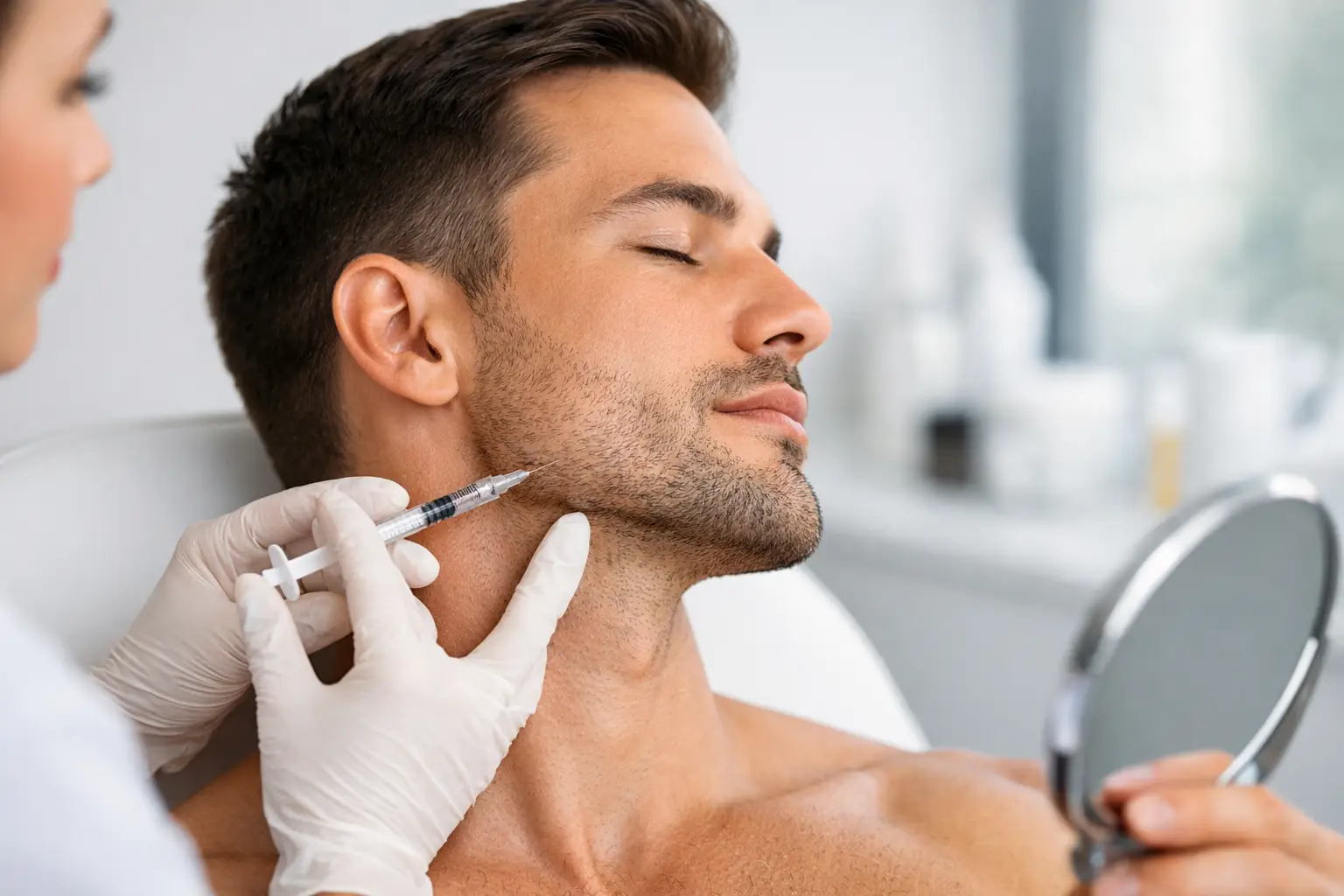
A sharper jawline can make the whole face look more balanced, rested, and defined. For many patients, that is the appeal of a jawline filler guide – not chasing a drastic change, but understanding how a nonsurgical treatment can refine the lower face in a way that still looks like you.
Jawline filler is one of the most requested treatments for patients who want more structure without surgery. Some want to strengthen a naturally soft profile. Others want to offset early jowling, improve facial symmetry, or restore definition that has faded with age. The right plan depends on your anatomy, skin quality, and how subtle or sculpted you want your result to be.
Jawline filler uses dermal filler, most often a hyaluronic acid-based product, to add structure along the mandible and chin area. When placed well, it can create cleaner angles, improve side-profile balance, and reduce the appearance of heaviness near the lower face.
That does not mean filler removes loose skin or replaces a surgical lift. It works best by enhancing shape and support. In some patients, that means a stronger back jaw angle near the ear. In others, it means softening pre-jowl hollows or creating a smoother transition from chin to jawline.
The best results look intentional but not obvious. You should still look like yourself, just more defined and refreshed.
Good candidates are usually adults who want better definition, mild contour improvement, or support in the lower face without downtime from surgery. You may be a strong candidate if your concerns include a weaker jawline, mild early jowls, facial asymmetry, or loss of structure with aging.
Skin quality matters. If laxity is mild to moderate, filler may help create a firmer-looking outline. If skin laxity is more advanced, filler alone may not give the result you want. In that case, a provider may recommend combining treatment with collagen-stimulating options, skin tightening, or discussing whether a surgical approach would better match your goals.
This is where consultation matters. Two patients can both say, “I want a sharper jawline,” but one may need chin support, while the other may need contouring near the angle of the jaw. The treatment should be built around the face in front of the injector, not copied from a photo or trend.
A medically grounded consultation should look at more than one line on the face. Your provider will assess your profile, chin projection, lower-face symmetry, skin thickness, muscle activity, and any jowling or volume loss. They should also review your medical history, past filler experience, allergies, and any tendency toward bruising or swelling.
This is also the time to talk honestly about the look you want. Some patients want very soft refinement. Others want a more sculpted contour that shows in photos and from the side. Neither is wrong, but the amount of product, the injection pattern, and sometimes even the filler choice can differ.
At Youthful Glow Med Spa, that kind of individualized planning matters because safe, natural-looking filler is never one-size-fits-all. Experience, anatomy knowledge, and a conservative eye all play a role.
Jawline filler appointments are usually straightforward. The skin is cleansed, photos may be taken, and the injector maps the treatment areas. Depending on the plan, filler may be placed with a needle, a cannula, or a combination of both.
Patients often describe the procedure as very tolerable. You may feel pressure, pinching, or brief stinging, but many modern fillers contain lidocaine to improve comfort. The full appointment often takes less than an hour, though first visits can take longer because consultation and facial assessment are part of doing the treatment well.
The amount of filler varies. Some patients need a conservative amount for gentle structure. Others need more than expected, especially if the goal is stronger contour in a larger face or if there is significant volume loss to correct. Good providers usually build gradually rather than overfilling in one sitting.
One of the main reasons patients choose filler is that results are visible quickly. You will usually notice improved shape right away, but the final look takes time. Swelling can temporarily make the area look fuller or slightly uneven in the first several days.
Most patients have a better sense of the result after about two weeks. At that point, the filler has settled and the tissues have calmed down. If refinement is needed, a follow-up visit may be recommended.
Longevity depends on the product used, your metabolism, movement in the lower face, and how much filler was placed. Jawline filler often lasts longer than filler in high-movement areas like the lips, but it is still temporary. Many patients enjoy results for around 9 to 18 months, though that range can vary.
Recovery is usually manageable. Mild swelling, tenderness, and bruising are common. Some patients feel sore along the jaw for a few days, especially when chewing or touching the area. That does not usually mean something is wrong. It is simply part of the normal healing process.
Most people return to normal activity quickly, though you may want to avoid intense workouts, alcohol, or excessive heat for the first day or so if your provider recommends it. If you have an event coming up, planning ahead is wise. Even when treatment goes smoothly, you do not want fresh swelling in your photos.
Small irregularities can happen early and often improve as swelling resolves. The key is patience and follow-up rather than judging the final outcome too soon.
Any injectable treatment carries risks, and jawline filler is not something to treat casually because it is common on social media. Potential side effects include swelling, bruising, tenderness, asymmetry, lumps, and product migration. More serious vascular complications are rare, but they are the reason medical training and anatomy expertise are essential.
A skilled injector knows where filler can safely create support and where caution is needed. They also know when filler is not the right answer. Sometimes the best consultation is the one that redirects a patient toward a different treatment because it will produce a better and safer outcome.
If you are choosing a provider, ask about experience with lower-face anatomy, the type of fillers used, expected follow-up, and how complications are handled. Clear answers matter.
Jawline filler cost is usually based on the type of filler and the number of syringes needed. That is why pricing can vary more than patients expect. A patient seeking a subtle improvement may need far less product than someone trying to build stronger structure or correct asymmetry.
Cheaper is not always better value. With filler, you are paying for product, technique, clinical judgment, and safety protocols. A lower price may sound appealing until it leads to undercorrection, overfilling, or poorly balanced results that require correction later.
A good consultation should give you realistic expectations about how much product may be needed now and what maintenance might look like over time.
Often, yes. The lower face does not exist in isolation. If the chin is recessed, chin filler may be part of the plan because it helps the jawline look cleaner and more proportional. If skin texture and crepiness are part of the concern, regenerative treatments or collagen-focused services may improve the quality of the overlying skin. If the upper face appears heavy, balancing the face as a whole can sometimes matter more than adding more filler below.
This is one of the biggest truths in any jawline filler guide: the best aesthetic results usually come from full-face assessment, not treating one feature as if it stands alone.
Before treatment, ask what kind of result is realistic for your anatomy, how much filler may be appropriate, how long swelling may last, and what happens if you do not love the result. If hyaluronic acid filler is being used, it is reasonable to ask whether it can be dissolved if needed.
You should also ask whether your concerns are truly volume-related or whether skin laxity is the larger issue. That answer can save you from spending money on a treatment that will not fully address your goal.
A well-done jawline filler treatment can create elegant definition and better facial balance without surgery or a long recovery. The best place to start is not with a trend photo, but with a thoughtful consultation that respects your anatomy, your safety, and the version of yourself you want to see in the mirror.

