
That under-eye area tends to tell the truth before the rest of the face does. When you start noticing hollowness, crepey skin, dark circles, or a tired look that makeup cannot fully cover, regenerative treatments often come up fast. If you are weighing prf vs prp under eyes, the real question is not which one sounds newer or trendier. It is which option fits your anatomy, skin quality, goals, and timeline.
Both PRP and PRF use your own blood to support rejuvenation, which is a major reason many clients find them appealing. These treatments are designed to stimulate repair rather than simply camouflage the problem. Under the eyes, that can mean gradual improvement in skin texture, fine lines, and overall quality, with some benefit for dark circles and mild hollowness depending on the cause.
PRP stands for platelet-rich plasma. PRF stands for platelet-rich fibrin. Both are created by drawing a small amount of your blood and processing it so the most useful healing components can be placed back into the treatment area.
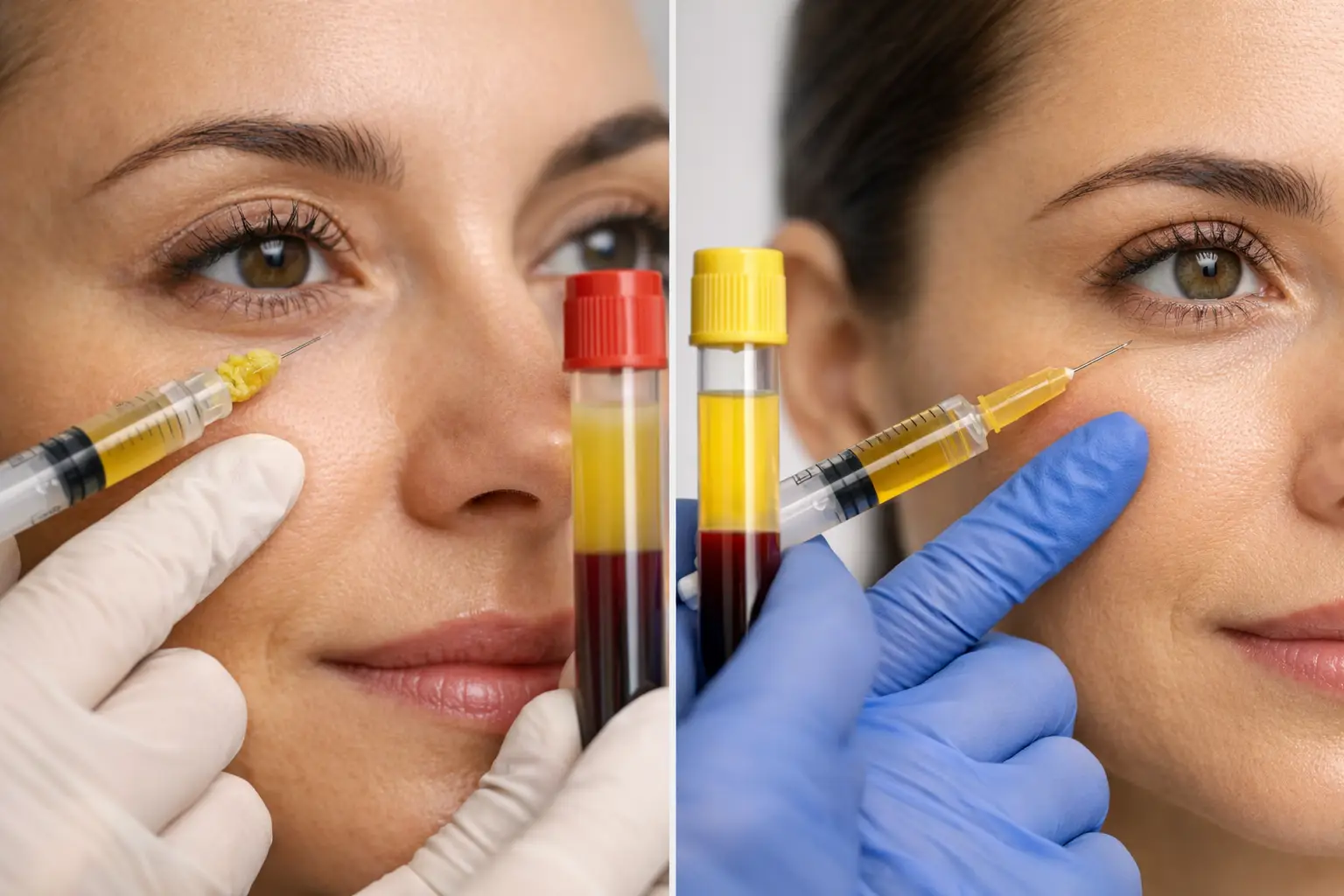
The difference comes down to how the blood is prepared and what ends up in the final product. PRP is typically spun at a higher speed, which separates the platelets into a plasma layer. PRF is processed more gently and usually without anticoagulants, allowing it to contain platelets, fibrin, white blood cells, and growth factors in a form that releases more gradually.
For under-eye rejuvenation, that slower release is one reason PRF gets so much attention. The skin under the eyes is thin, delicate, and often difficult to treat well. A product that supports collagen over time can be especially helpful in this area. That said, PRP is still a solid option and has a longer track record in many aesthetic settings.
PRP is often chosen for clients who want improvement in skin tone, fine lines, and a more refreshed look without adding traditional filler. Once injected or used with microneedling, the concentrated platelets release growth factors that can support tissue repair and collagen production.
Under the eyes, PRP may help when the main concern is thin, crepey skin or a dull appearance. Some clients also see improvement in dark circles, particularly when those circles are related to skin quality rather than deep structural shadowing or significant pigment.
Results with PRP are not immediate in the way filler can be. This is a gradual treatment. Most people need a series, and the best outcome usually comes from patience and realistic expectations.
PRF is often considered the next step in regenerative under-eye treatment because of its fibrin matrix and slower release of growth factors. In practical terms, that means it may continue working over a longer period after treatment.
For under-eye concerns, PRF is commonly used to improve crepey skin, soften a tired appearance, and support collagen in patients who want a more natural approach. Because it contains fibrin, PRF can also have a slightly fuller quality than PRP, although it is not a replacement for filler in patients with more significant volume loss.
Some providers also use advanced variations such as PRF EZ Gel, which can offer a smoother, more supportive consistency for areas where subtle volume and skin rejuvenation are both part of the goal. Whether standard PRF or a gel form is appropriate depends on the individual and the treatment plan.
This is where the answer becomes very personal. Dark circles are not one single issue. They may come from pigmentation, visible blood vessels, thin skin, under-eye hollowness, lifestyle factors, allergies, or a combination of several causes at once.
If your dark circles are mostly due to thin skin and poor skin quality, PRP or PRF may help by improving the tissue itself over time. If your dark circles are created mainly by a tear trough hollow casting a shadow, regenerative treatment alone may not be enough. In that case, a provider may recommend a different or combined approach.
When comparing prf vs prp under eyes for mild hollowness, PRF often has an edge because it can offer a bit more support and a longer release of growth factors. But it still has limits. If there is moderate to severe volume loss, expecting either one to perform like under-eye filler would lead to disappointment.
Both treatments are generally well tolerated, and because they use your own blood product, many clients appreciate the natural aspect. The appointment usually includes a blood draw, preparation of the product, and careful placement under the eyes.
You can expect some swelling, mild tenderness, and possible bruising afterward. The under-eye area bruises easily, so even with excellent technique, bruising is always a possibility. Most people return to normal activities quickly, but social downtime varies depending on how your body responds.
The results develop gradually over several weeks. A single treatment may not be enough, especially if the goal is noticeable improvement in fine lines or skin crepiness. Many patients do best with a series spaced over time, followed by maintenance treatments.
PRP may be a good fit if you want a regenerative treatment with a long aesthetic history, you have mild under-eye skin concerns, and you are comfortable with subtle, gradual improvement. It can be a smart option for early intervention, especially when the issue is more about texture and brightness than volume.
PRF may be a better choice if you want a more advanced regenerative approach and your provider believes the slower release of growth factors may benefit your under-eye tissue more effectively. It is often attractive to clients who want natural-looking rejuvenation and are focused on collagen support rather than a quick fix.
Neither treatment is ideal for every under-eye concern. If puffiness from fat pads is the main issue, if excess lower lid skin is significant, or if strong pigmentation is present, another treatment route may make more sense. A careful consultation matters here because under-eye anatomy is one of the easiest areas to misread.
The under-eye area is delicate and highly technique-dependent. Even natural treatments require proper patient selection, sterile processing, and a provider who understands the anatomy and limits of the treatment.
A strong consultation should cover more than the product itself. It should include why you have the under-eye concern, whether regenerative treatment is likely to help, how many sessions you may need, and what kind of result is realistic. This is also the time to discuss medical history, healing tendencies, and whether combination treatment may give you a better outcome.
At a medically guided practice like Youthful Glow Med Spa, this kind of decision-making is part of the value. Experience matters, especially when treating an area where subtle changes can make a big difference.
For many clients, the choice between PRP and PRF comes down to priorities. If you want to stimulate collagen and improve skin quality gradually using your body’s own regenerative elements, both options can be worth considering. If you are expecting dramatic correction of deep hollows in one visit, neither is the right answer on its own.
PRF often appeals to patients looking for a more modern regenerative option with the potential for longer-lasting activity in the tissue. PRP remains relevant because it is well known, widely used, and helpful in the right candidate. Better does not always mean newer. Better means more appropriate for your face, your skin, and your goals.
A thoughtful provider will not push one treatment for everyone. They will assess whether your concern is volume loss, pigmentation, skin thinning, or all three. That is what leads to a treatment plan that feels worth it.
If your under-eyes make you look more tired than you feel, the best next step is not guessing between buzzwords. It is getting a clear assessment so the treatment matches the reason the area looks the way it does.

